Free to start · iPhone & Android
Train your ear.
Play by ear.
Hear a melody, find it on your instrument. SwarIT trains the skill underneath playing by ear: knowing what you just heard, measured from home.
Hear a melody, find it on your instrument. SwarIT trains the skill underneath playing by ear: knowing what you just heard, measured from home.
The idea
Almost nobody can name a note out of thin air, and you don't need to. What carries you through real music is hearing where a note sits in relation to home.
That relationship only exists if home is actually there. So SwarIT keeps a drone running underneath every exercise: a steady tonic that never moves. You stop memorising twelve isolated sounds and start learning twelve distances, and a distance sounds the same in every key.
The method comes from Hindustani classical music, where the ear is trained against a tanpura and every note is felt in relation to Sa. It turns out to be the quickest way for anyone to learn relative pitch, whatever music you play.
Ear training
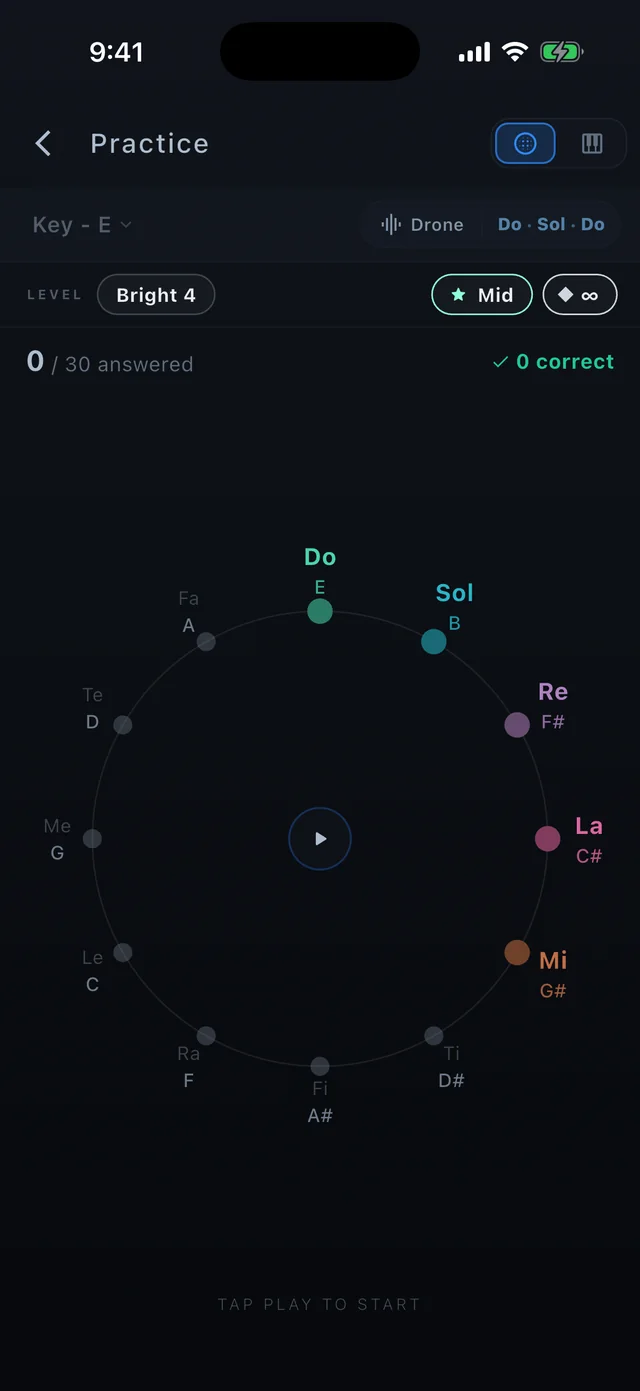
A drone holds the tonic. One note sounds, and you find it on the circle. Score 18 of 20 to open the next level, from the tonic and fifth out to all twelve notes across three octaves.
New · The Bench · Phrase
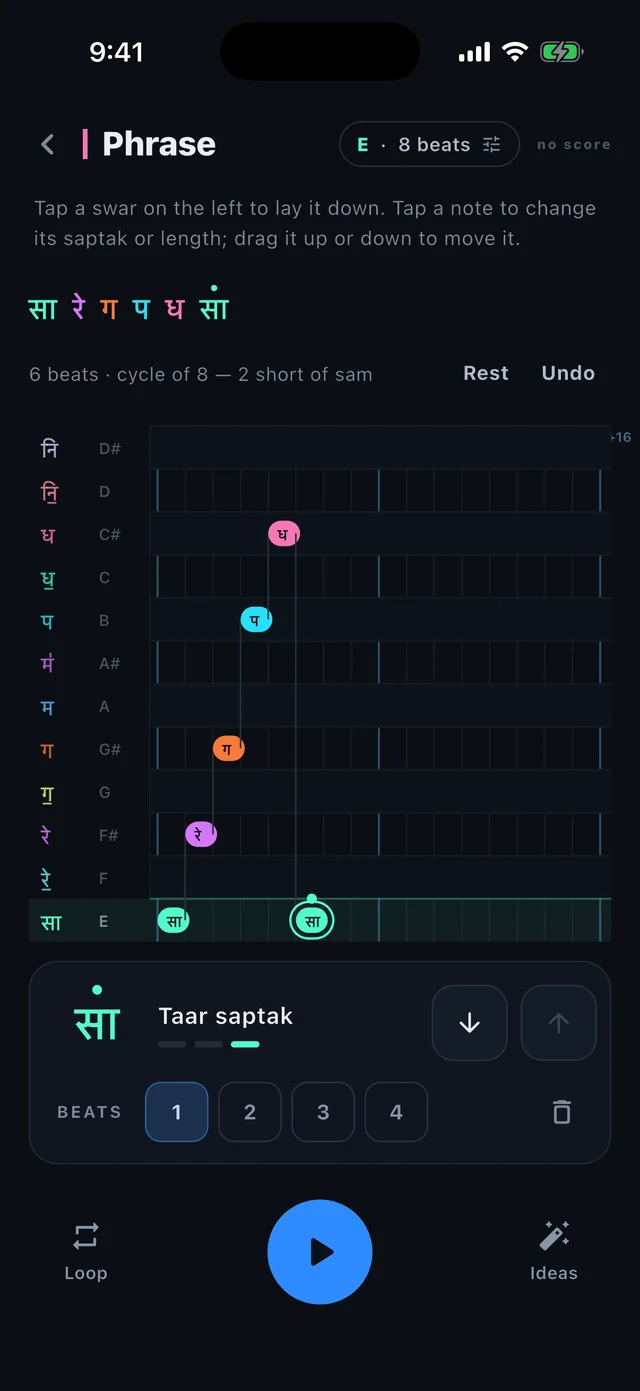
The Bench is the half of SwarIT with no score and no locks. In Phrase you lay notes on a beat grid, move one up or down an octave, stretch it, and loop the phrase until it lands on the downbeat. Keep the ones you like.
New · The Bench · Beat
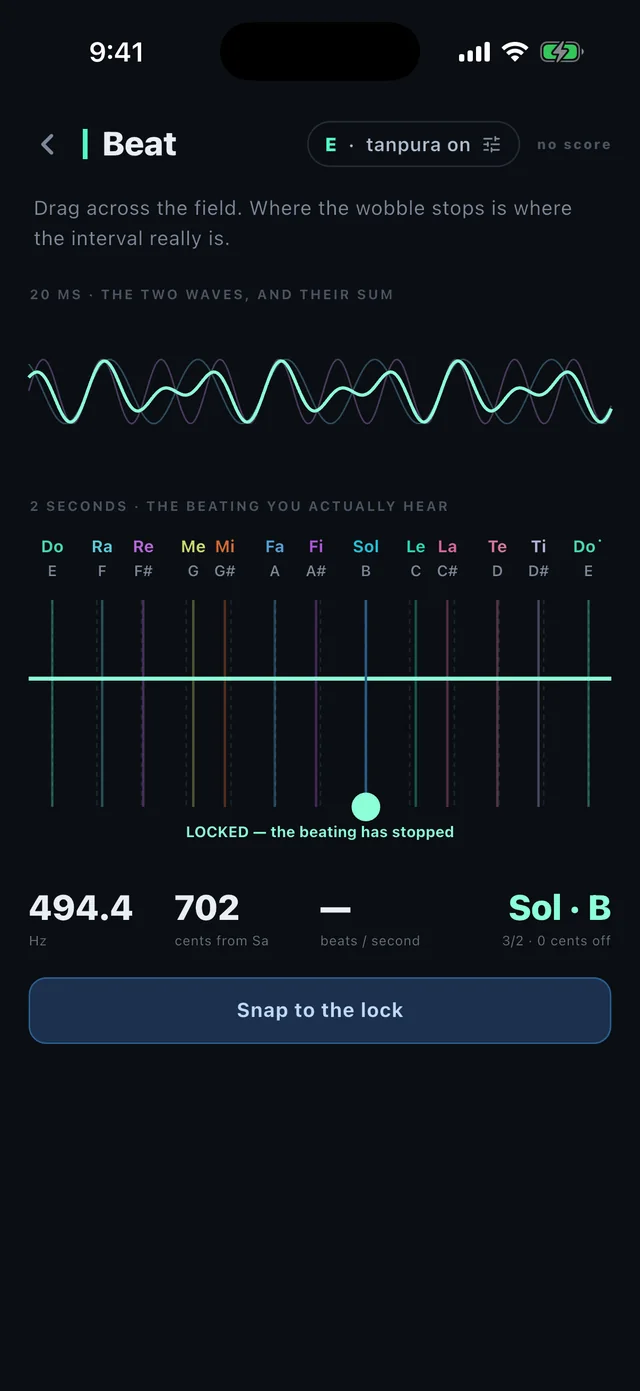
Slide a tone against the tonic and watch the two waves fight, then settle. Where the beating stops is where a pure fifth really is, a few cents away from the piano's.
Free Play
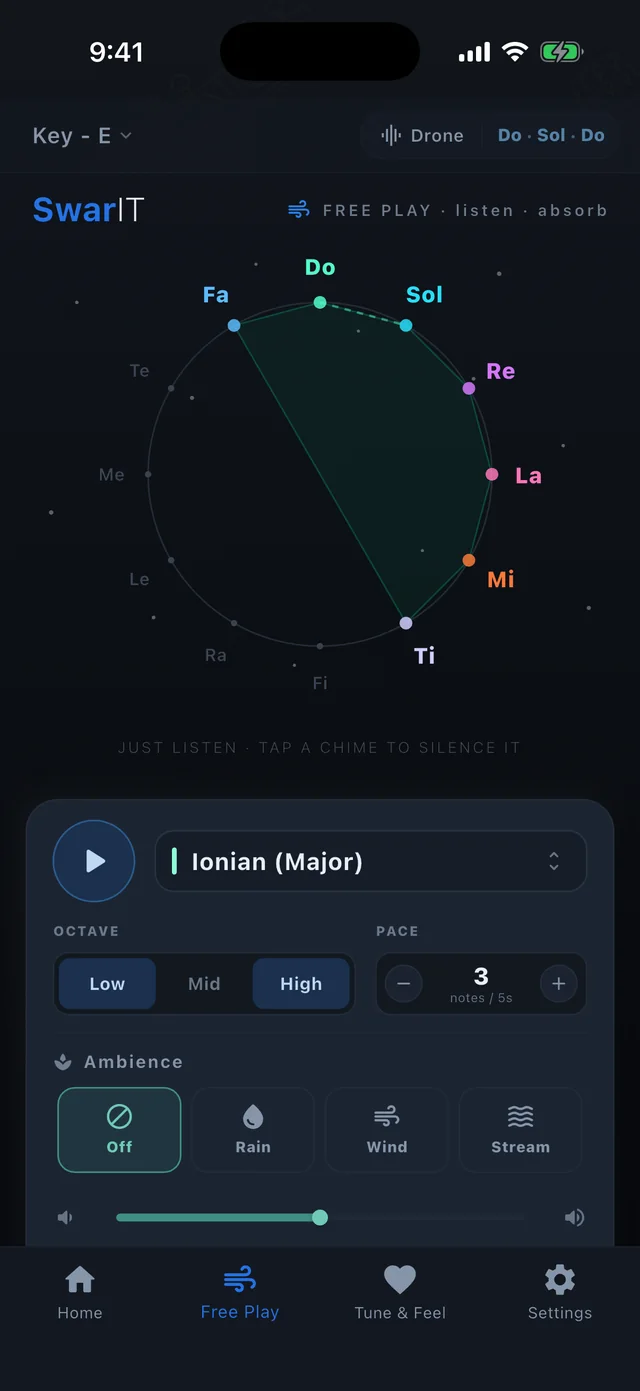
Ambient chimes in any of 57 ragas and modes, over the drone. Nothing to answer. Mute a note, set the pace, and leave it running while you do something else.
Tune & Feel
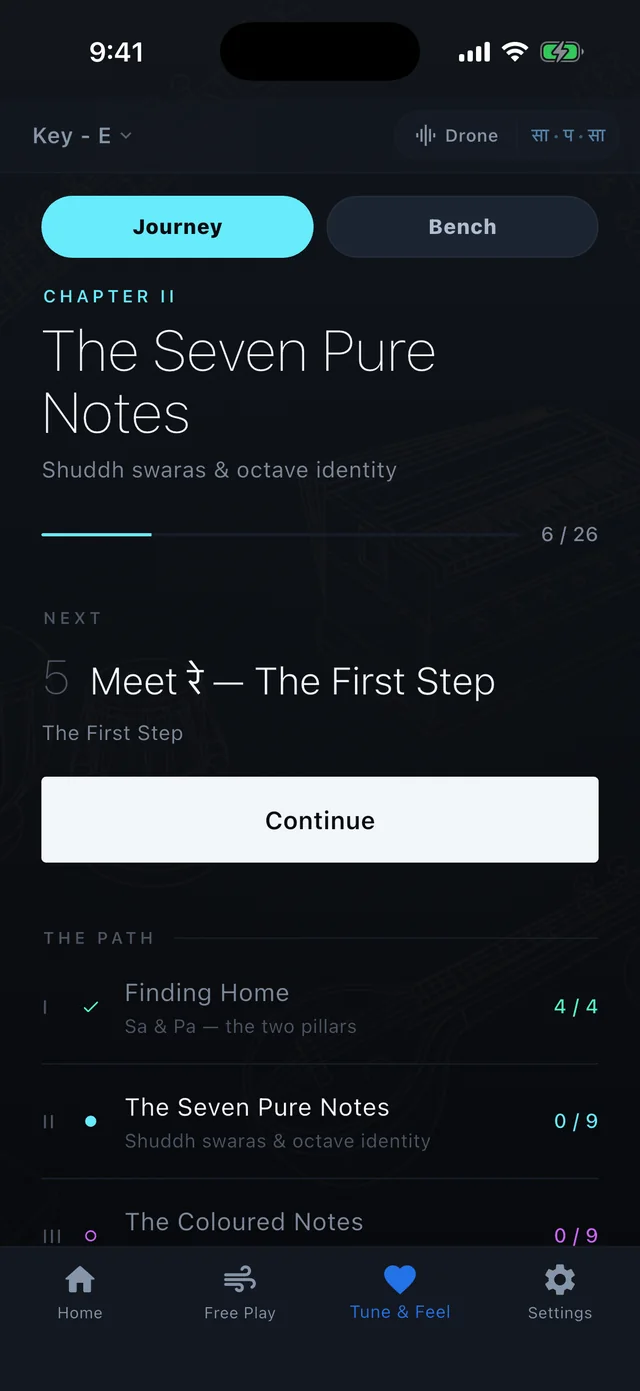
A guided course through all twelve notes, one at a time over the drone, until each one's colour is obvious rather than worked out. Sing-along steps listen to your voice on the device and never record it.
Who it's for
If you want to hear music and know what it is, the method is the same.
Learn songs without tabs. Hear the chord change before your hand goes looking for it.
Find the note before you sing it, and hear when you have landed on it.
Improvise from what you hear rather than what you remember. Every key, the same distances.
Swar recognition against the tanpura you already practise with, in sargam.
The details
The things that decide whether an ear trainer survives past the first week.
Letters (C D E), solfège (Do Re Mi), scale degrees (1 2 3) or sargam (Sa Re Ga). Switch any time; your levels and statistics don't mind which you use.
Move the tonic to suit your voice, your tuning or the song in your head, and the drone follows. What you learn in one key is already true in the rest.
A confusion view tells you which pair of notes you keep swapping: the one thing worth practising tomorrow.
Dark, still and calm. No adverts, nothing blinking for attention while you are trying to listen.
Tune & Feel, the tanpura drone, the Bench, your stats and streak, and the opening levels of every path.
Every level, all 11 melody modes, all 57 ragas in Free Play, the upper chord and interval levels, and Random Key. No subscription.
Free to start, on iPhone and Android.